Problems solved,
products shipped
Three products we built and run ourselves. The problem each one started from, what we shipped, and where it stands today.
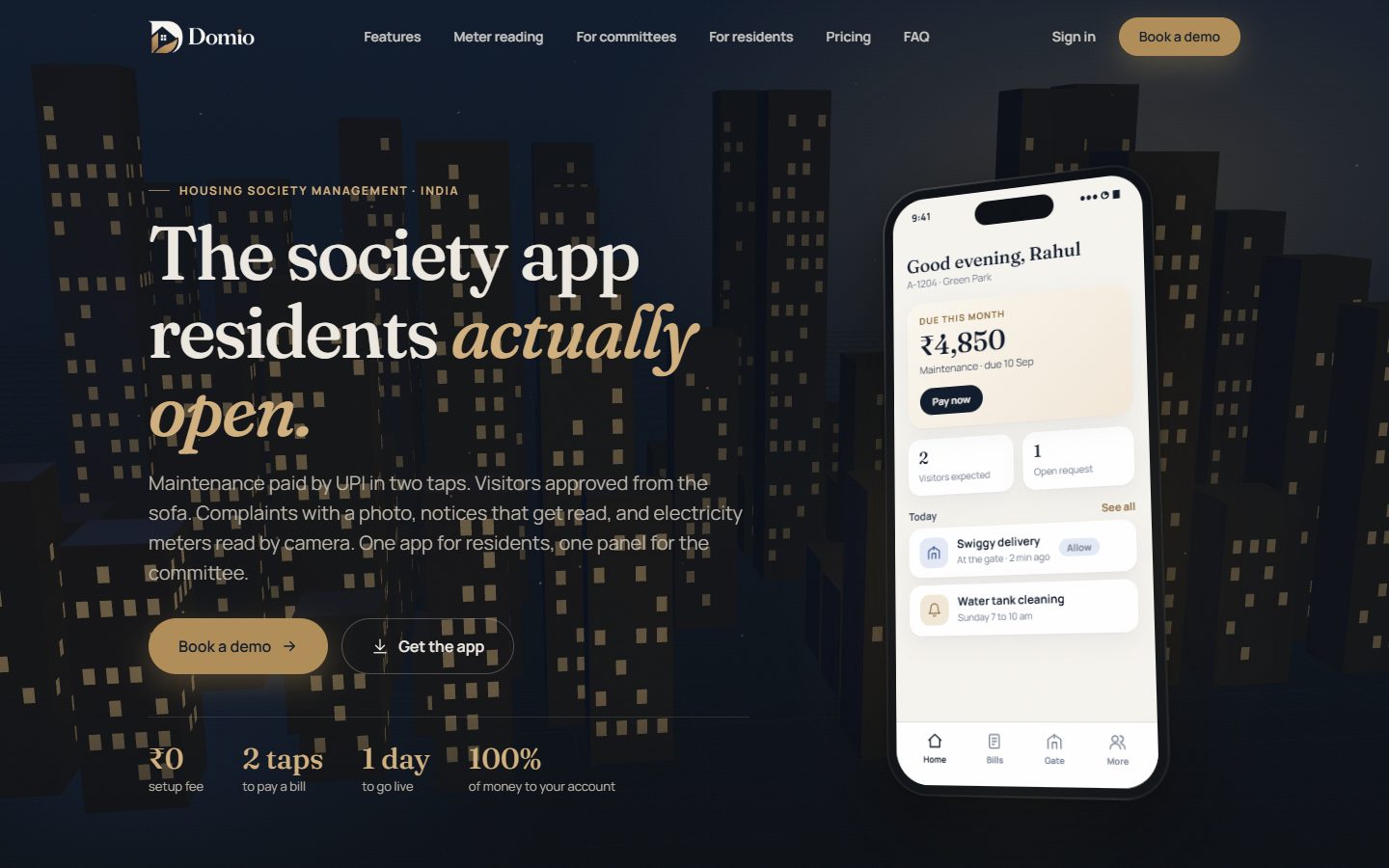
Domio — Housing Society Management App
The Challenge
Most Indian housing societies run on a WhatsApp group, a treasurer's spreadsheet and a notebook at the gate. Maintenance arrives late as bank-transfer screenshots someone has to reconcile by hand, electricity readings get copied against the wrong flat, complaints vanish into the chat, and every committee election means starting over from someone's laptop.
What We Built
We built Domio as a two-sided product: an Android app for residents (every page also works in a browser) and a web panel for the committee. Bills go out on the first with maintenance, sinking fund, one-off charges and electricity itemised, and residents pay by UPI, card or net banking through the society's own Razorpay or PayU account, so the money lands straight in the society's bank. Staff read electricity sub-meters by pointing the phone at the meter: the app reads the sticker and the dial, checks the number against last month, and raises the bill on confirm. The gate logs visitors, deliveries, staff and vehicles, and residents approve from wherever they are. Each society gets its own database, its own web address and logo, and role-based access for reception, manager and treasurer.
Where It Stands
Domio is live at domioapp.in with no setup fee and a society going live in a day. Every payment settles against the right flat with a receipt that can be downloaded years later, and every visitor and meter reading is on record and searchable. Because it is fully white-label and multi-tenant, KStar can deploy it for housing societies, HOAs, gated communities and property managers outside India as well. Ask us about licensing.
Technologies Used
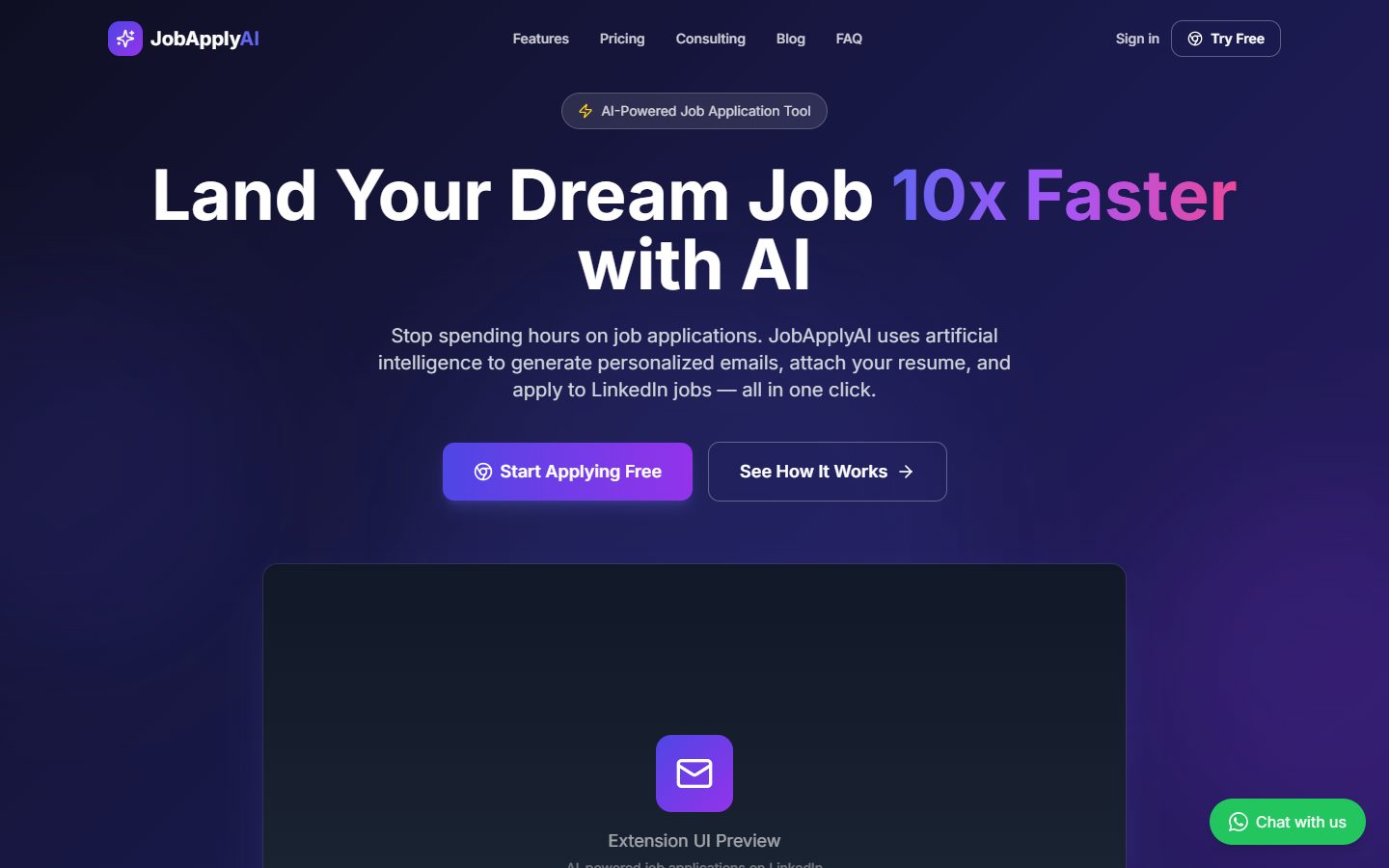
JobApplyAI — AI Job Applications for LinkedIn
The Challenge
Applying for a job on LinkedIn means reading the post, writing a fresh email, finding the recruiter, attaching a resume and sending it — twenty minutes per application, repeated dozens of times a week. Job seekers either burn out or send the same generic email to everyone, and most auto-apply tools want the resume uploaded to their servers first.
What We Built
We built JobApplyAI as a Chrome extension backed by a Next.js web app. It appears on any LinkedIn job page; one click has the AI read the job description and the candidate's profile, write a personalised email, attach the resume and send it. The same engine drafts direct messages to recruiters and comments on hiring managers' posts. Every application is logged with the email that went out, so follow-ups are systematic. The resume stays in the browser. Credits are pay-as-you-go, paid by UPI and verified by a person, and never expire.
Where It Stands
JobApplyAI is live on the Chrome Web Store with three free applications for anyone to try, then credit packs from 50 to 1,500 applications. Support runs over WhatsApp, and the product also sells one-to-one coaching sessions: resume and ATS review, LinkedIn audits, mock interviews and career roadmaps.
Technologies Used
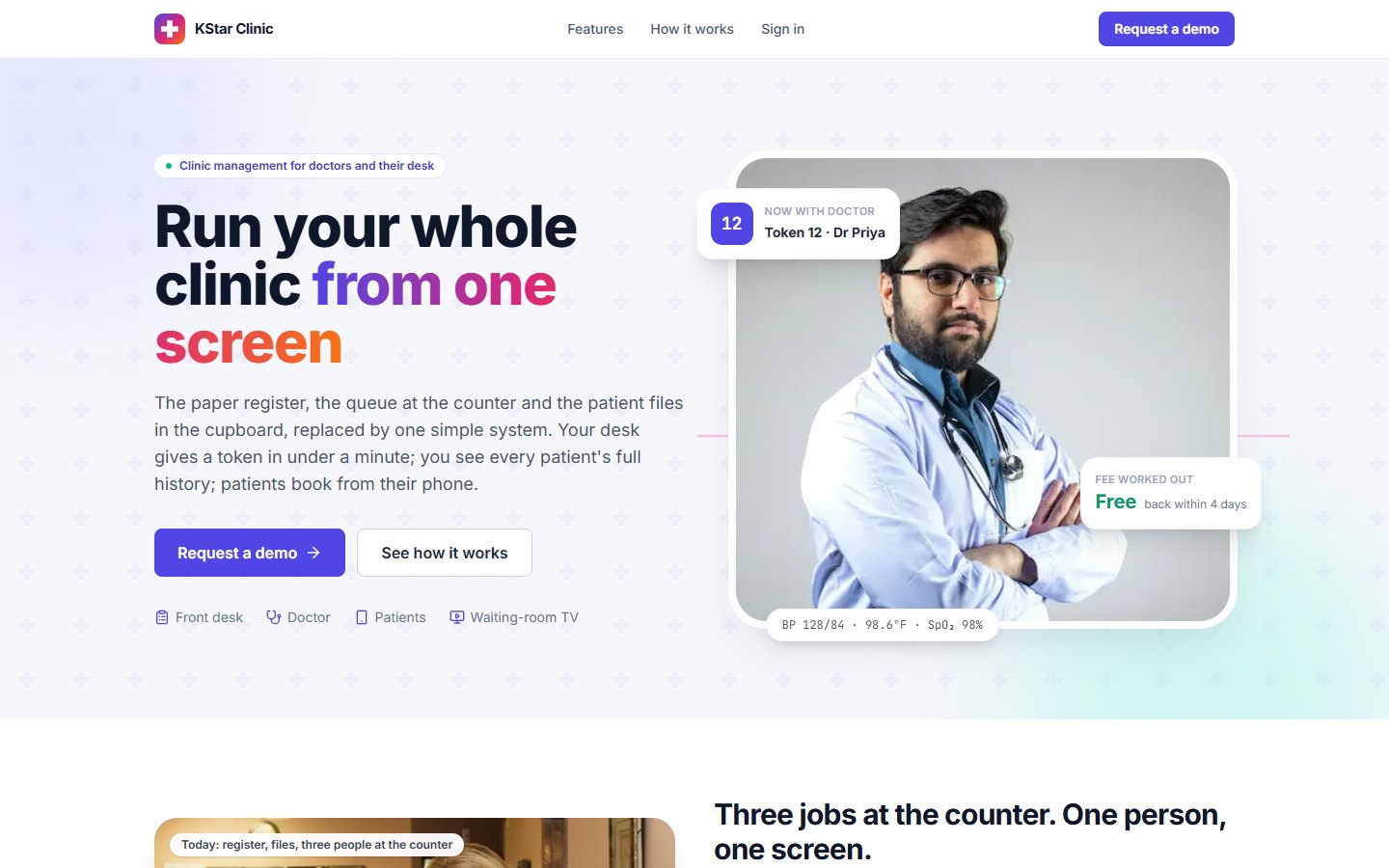
KStar Clinic — Clinic Management System
The Challenge
Most small clinics still run on a paper register. One person at the counter writes the entry and takes the fee, someone else takes vitals and asks what the problem is, and a third keeps track of who goes in next. Patients phone, nobody picks up, so they come in, queue and pay before they get a number. Whether someone pays a new-patient fee, a follow-up fee or nothing depends on when they last paid that doctor, and that gets worked out from memory. Old files go missing just when the doctor needs them.
What We Built
We built KStar Clinic as one web system with a screen for each person in the clinic. The desk searches by patient ID, phone or name (a family sharing one number all show up), picks the doctor, and the system works out the fee from that doctor's own rules and shows the reason, then takes payment by cash, UPI, card or online, issues a token and records vitals on the same screen. Doctors call the next patient, see the full history with vitals trends, and either type a prescription (with "repeat last") or photograph a handwritten one. The owner sees every doctor's queue and collections on one dashboard, sets fees, timings and leave per doctor, and gets reports that include every fee the desk changed and why. Patients book a slot from their phone and sign in with a one-time code, and the waiting room gets a TV screen that shows tokens and first names only.
Where It Stands
KStar Clinic is live at clinic.kstarcapitals.com as a working demo with a made-up clinic, which we walk doctors through on a call. A clinic that signs up gets its own installation, database and web address. The base underneath — records, queue, fees, roles, booking, display screen and reports — is what we adapt for diagnostic labs, schools and coaching centres, salons, gyms, service centres and any other business that still runs on a register.
Technologies Used
Have a product like this in mind?
Let's Talk