Every business needs accurate financial records, but not every business needs the same accounting structure. Some companies benefit from a dedicated internal accountant, while others can manage their requirements through an external accounting provider.
For businesses in Dubai, the right decision depends on transaction volume, operational complexity, reporting requirements, budget, and the amount of day-to-day financial support needed.
What Is an In-House Accountant?
An in-house accountant works directly for the business and is involved in its internal financial operations. Responsibilities may include recording transactions, reconciling bank accounts, monitoring supplier payments, following up on customer balances, and preparing management reports.
Because the accountant is part of the organization, they may have direct access to operational teams and understand internal procedures in greater detail.
However, the company must consider the full cost of employment, training, software, supervision, and continuity when the employee is absent or leaves.
What Is Outsourced Accounting?
Outsourced accounting means engaging an external provider to perform agreed financial tasks. Depending on the contract, the provider may handle bookkeeping, reconciliations, accounts payable and receivable, financial statements, and accounting support for tax compliance.
The arrangement can be limited to specific services or cover most routine accounting activities.
The business generally retains responsibility for providing complete documents, approving payments, reviewing financial reports, and making management decisions.
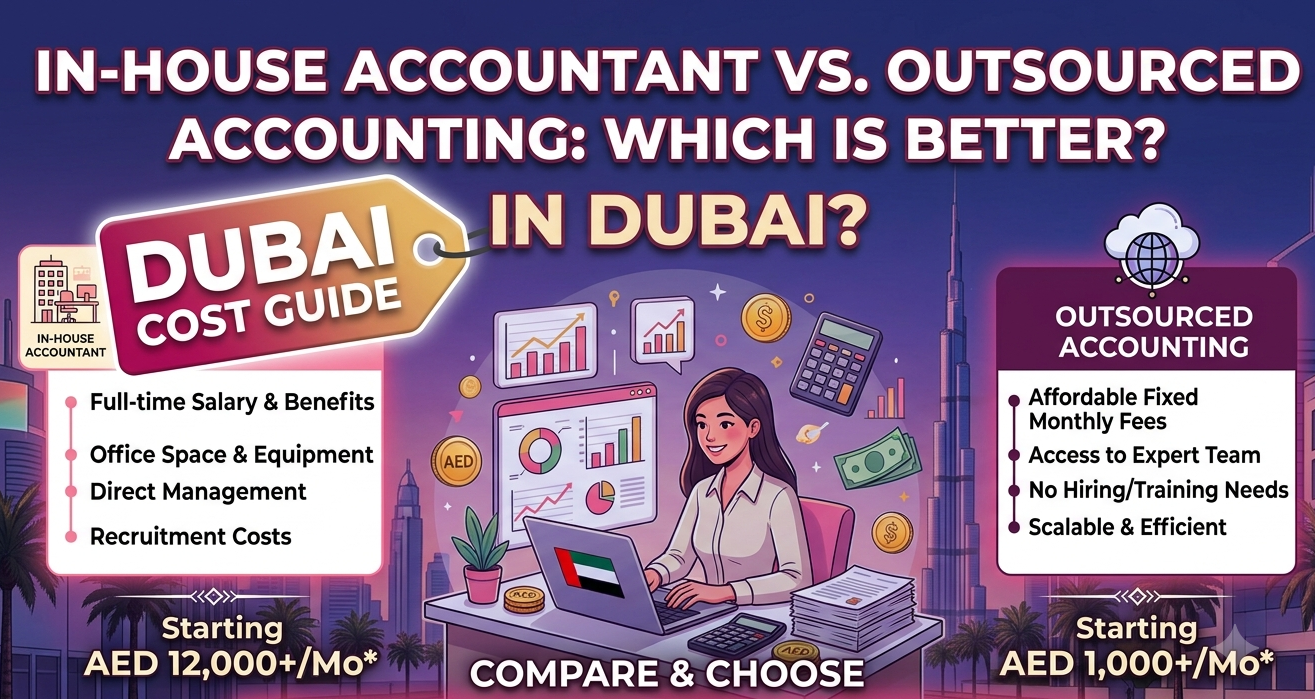
Comparing the Two Models
1. Cost
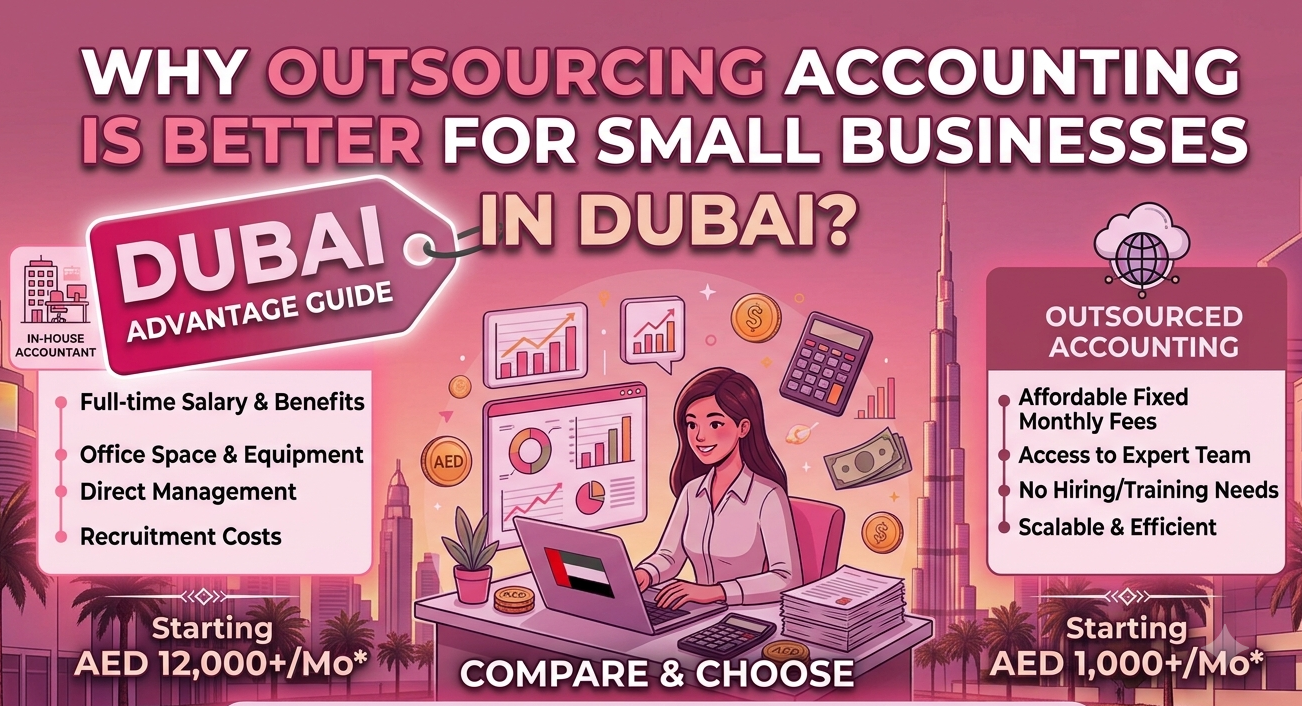
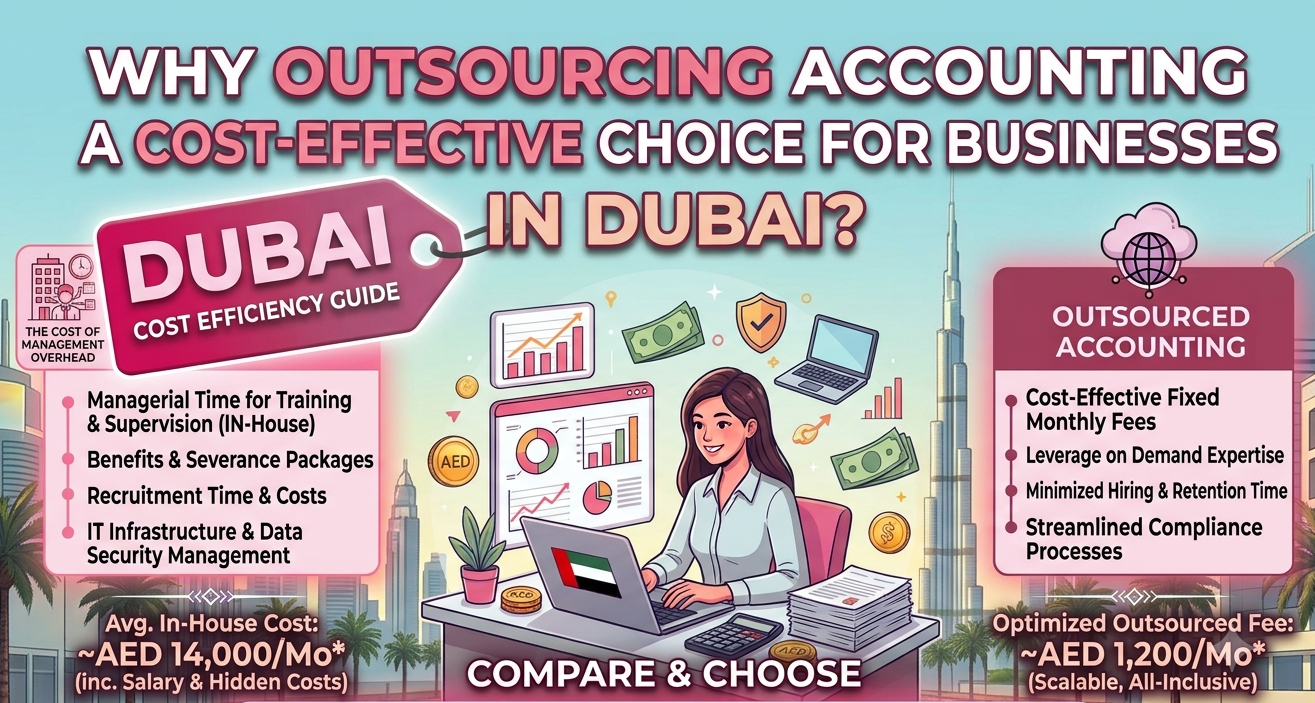
An internal employee creates a recurring employment cost, regardless of whether the monthly workload fluctuates. Outsourcing generally uses an agreed service fee based on scope and workload.
An internal accountant may be more economical when the business has enough daily work to justify a full-time role. Outsourcing may be more practical when accounting needs are limited or vary throughout the year.
Compare total costs rather than salary alone.
2. Expertise
An internal accountant provides continuity and business-specific knowledge. However, one person may not have expertise in every area of accounting, reporting, systems, and tax compliance.
An external provider may offer access to a wider range of skills, depending on its team and qualifications. Businesses should confirm who will actually handle the work and whether specialist advice is included.
3. Flexibility
A growing company may need additional reporting, reconciliations, or financial analysis at certain times. An outsourced arrangement may allow the service scope to expand or contract by agreement.
An internal team can also grow, but recruiting additional staff takes time and adds employment costs.
4. Control and Communication
An in-house accountant is directly integrated into the company's daily activities. This can be useful when frequent coordination with sales, purchasing, inventory, or operations teams is necessary.
With outsourcing, the business needs clear communication channels, document-sharing procedures, reporting deadlines, and approval controls. Without these arrangements, work can be delayed by incomplete information.
5. Confidentiality and Security
Both models require proper safeguards. An internal employee needs appropriate access controls, while an external provider requires secure document sharing, confidentiality terms, and clearly defined access permissions.
Businesses should evaluate how financial information is stored, who can access it, and how access is removed when a relationship ends.
Which Model Is Best for Different Businesses?
Startups: Outsourcing may be a useful way to establish organized financial records without hiring a full-time accountant immediately.
Small and medium-sized businesses: Outsourcing may suit companies that need regular bookkeeping and reporting but do not require a full internal department.
Large or complex businesses: A dedicated finance team may be necessary when the business has high transaction volumes, inventory complexity, multiple locations, or extensive daily financial controls.
Hybrid model: Some businesses keep a finance manager or internal accountant for daily coordination and outsource selected tasks such as reconciliations, reporting, or specialist compliance support.
How to Make the Decision
Start by listing all accounting tasks and estimating how frequently each task occurs. Identify which activities require daily internal coordination and which can be completed remotely.
Then compare the cost, service quality, turnaround times, software requirements, security arrangements, and reporting capabilities of each model.
The decision should also consider business continuity. A documented accounting process makes it easier to maintain records if an employee or service provider changes.
Conclusion
Neither in-house nor outsourced accounting is automatically the better choice. The right model is the one that delivers reliable financial information, suitable control, and appropriate expertise at a sustainable cost.
Need help choosing the right accounting model for your Dubai business? Contact Stanza to discuss your current finance processes and explore a practical accounting support arrangement.