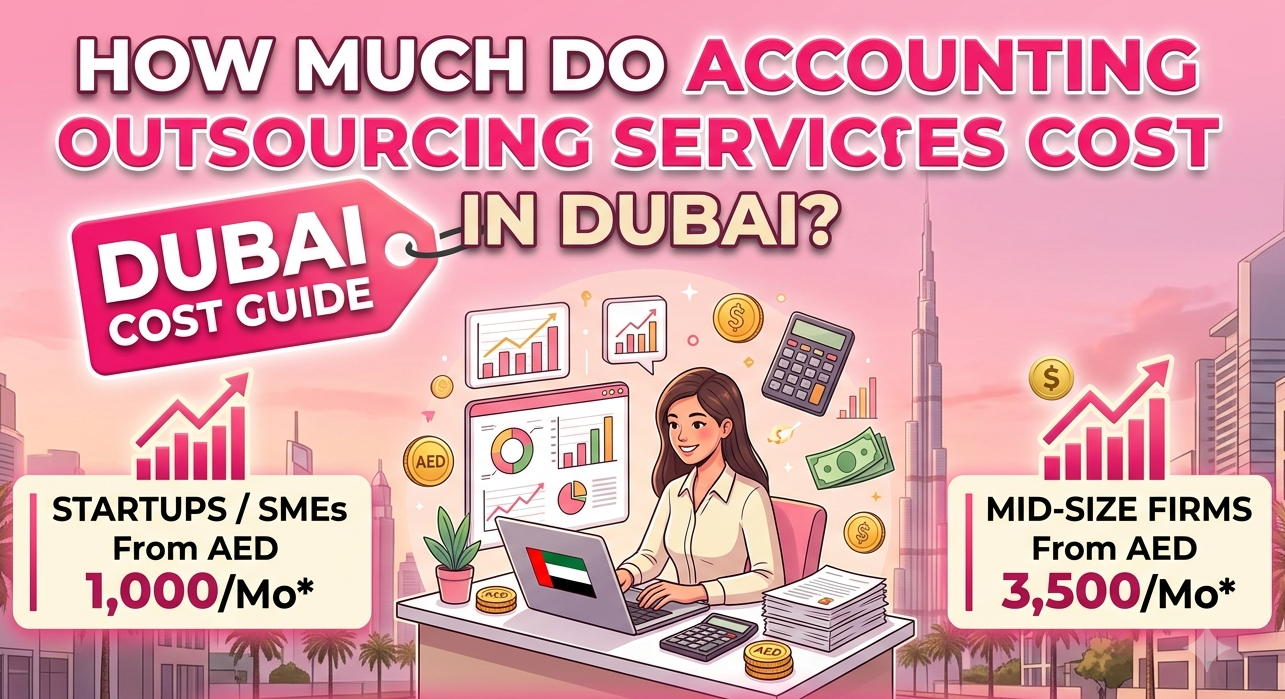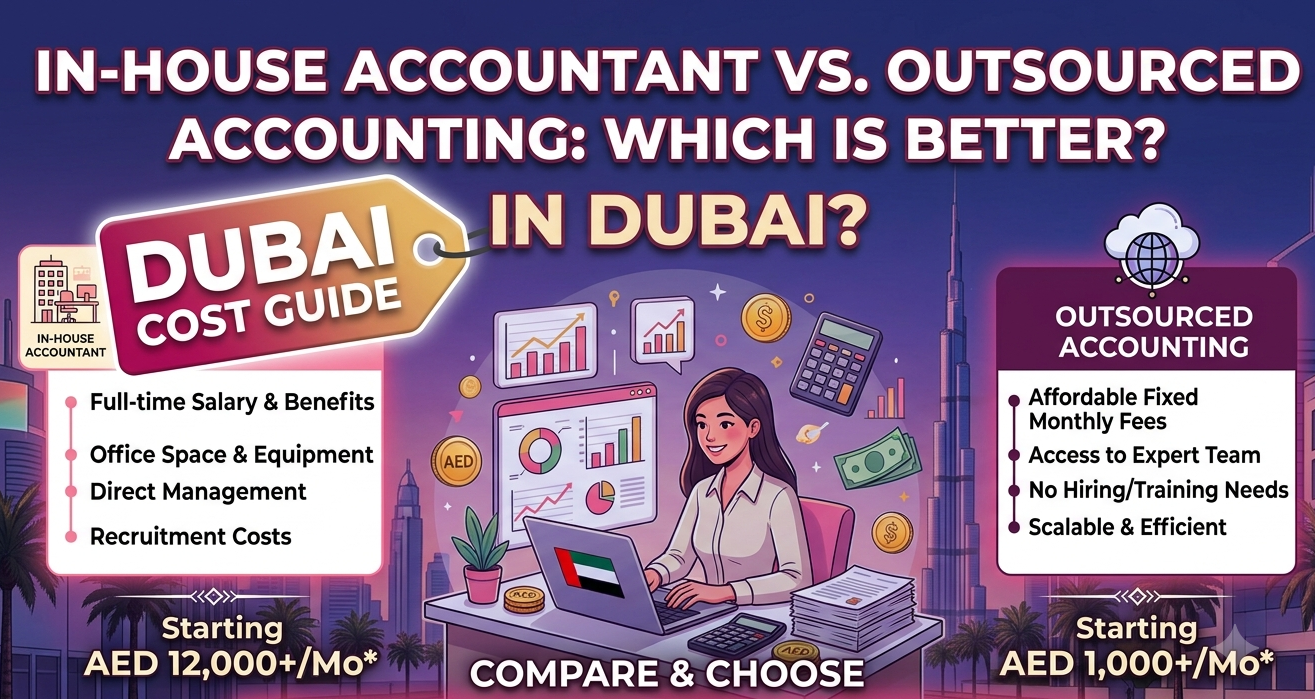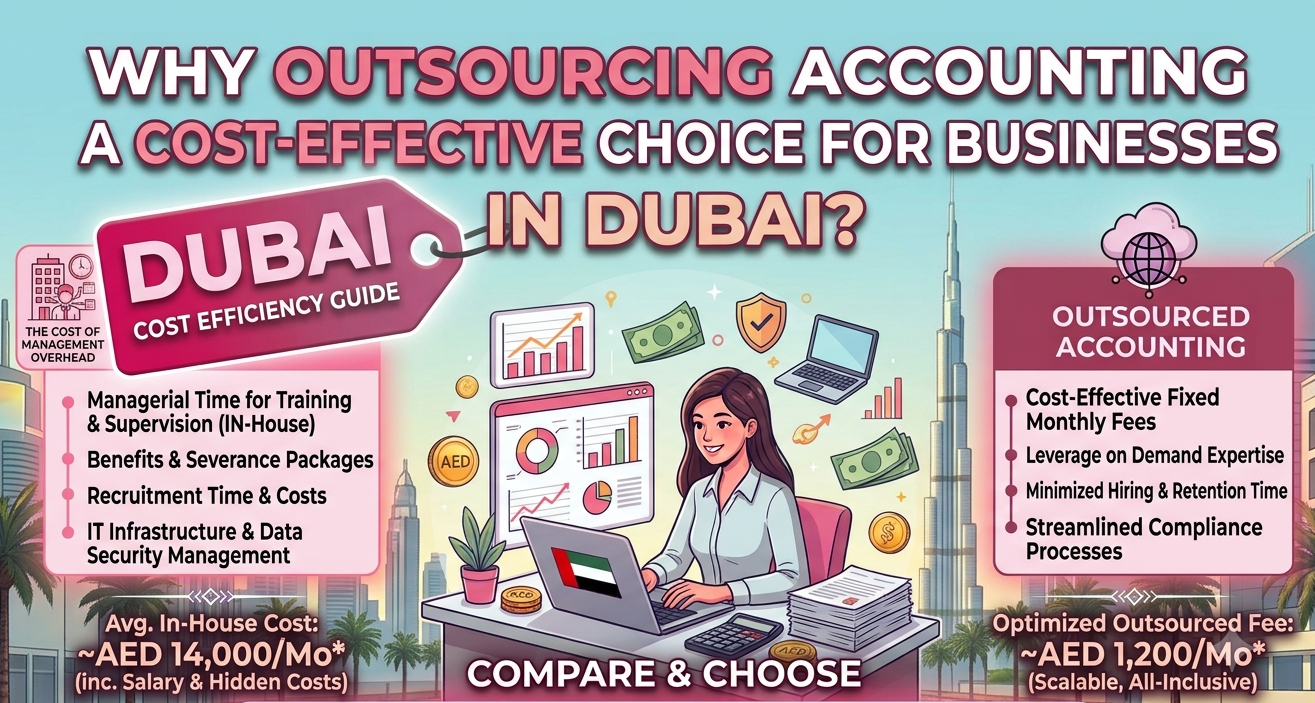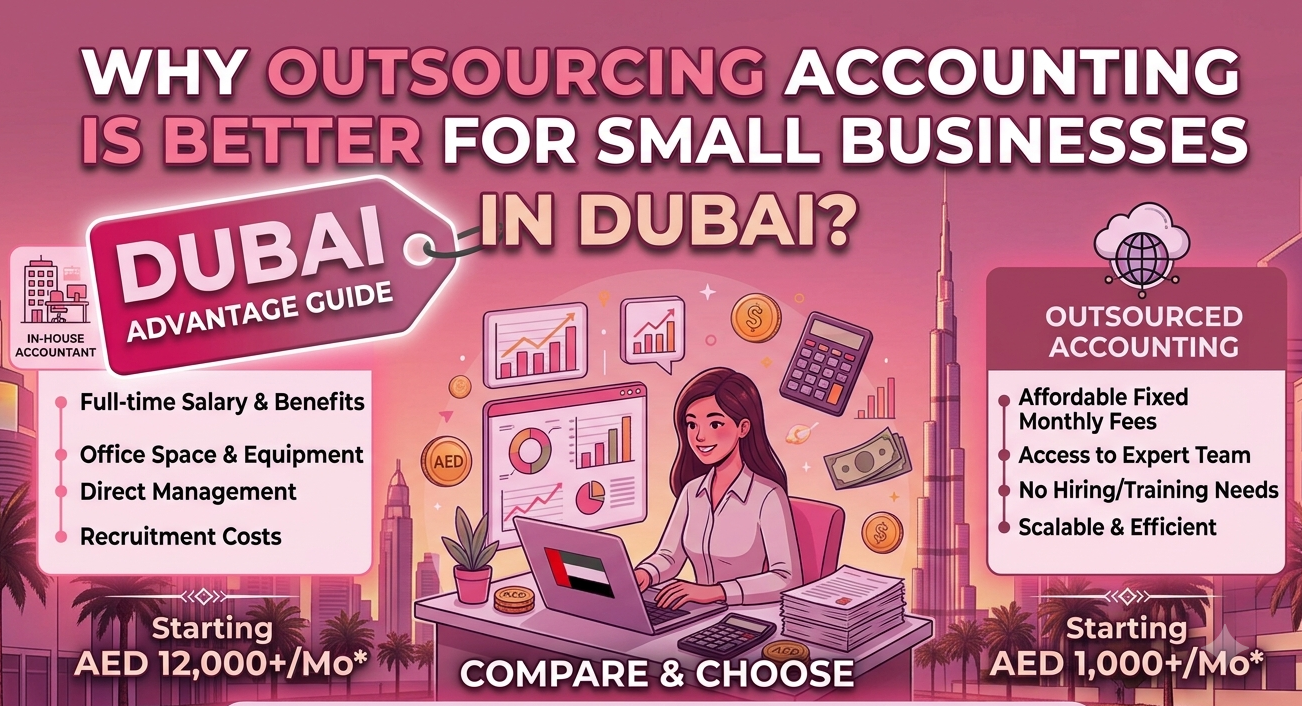
Running a small business in Dubai involves more than attracting customers and increasing sales. Business owners must also manage expenses, maintain accurate financial records, monitor cash flow, and meet applicable tax and reporting obligations. These responsibilities can become difficult to handle when a business has a small team and limited resources.
Outsourced accounting offers a practical alternative. Instead of building a complete internal accounting department, businesses can work with an external service provider to manage their accounting requirements.
What Is Accounting Outsourcing?
Accounting outsourcing means assigning selected financial tasks to an external accounting service provider. Depending on the business's needs, these tasks may include bookkeeping, bank reconciliations, accounts payable and receivable, financial reporting, payroll support, and assistance with VAT or Corporate Tax compliance.
The scope of service can be adjusted as the company grows. A startup may initially need basic bookkeeping, while an established SME may require monthly management reports, project profitability analysis, and more comprehensive financial controls.
1. Reduce the Cost of Maintaining an Internal Team
Hiring an accountant involves more than paying a monthly salary. Businesses may also need to consider recruitment, employee benefits, training, software, office space, and leave coverage.
Outsourcing allows a company to purchase accounting support based on its actual requirements. A business with a limited number of monthly transactions may need only a basic service, while a growing company can request additional reporting or reconciliation support.
The potential savings depend on the scope of work, transaction volume, and service provider's fees. Businesses should compare the total cost of each option rather than assume outsourcing is always cheaper.
2. Access a Broader Range of Accounting Skills
A small internal team may have limited experience in every area of accounting and tax compliance. An outsourcing provider may offer access to professionals with experience in bookkeeping, financial reporting, reconciliations, and tax-related processes.
This can be particularly useful when a business introduces new services, opens another location, or needs more detailed financial analysis.
Businesses should still confirm the provider's qualifications, relevant experience, service scope, and responsibility for tax filings before entering into an agreement.
3. Improve Financial Reporting and Decision-Making
Accurate financial records help business owners understand where their money comes from and where it goes.
Regular financial reports can show revenue trends, operating expenses, outstanding customer invoices, supplier liabilities, and profitability. Comparing actual results with budgets can also highlight unexpected costs before they become larger problems.
Outsourced accounting can establish a consistent monthly reporting process, giving management more reliable information for planning and investment decisions.
4. Support UAE Tax and Compliance Processes
Businesses operating in the UAE may have obligations relating to VAT, Corporate Tax, and financial recordkeeping, depending on their circumstances.
For example, the Federal Tax Authority states that the standard mandatory VAT registration threshold for resident businesses is AED 375,000 in taxable supplies and imports, subject to the applicable rules. Registered businesses must also monitor their VAT return and payment deadlines.
Corporate Tax introduces additional requirements for businesses within its scope. Outsourcing can help maintain organized records, reconcile accounts, and prepare information needed for compliance. However, outsourcing does not transfer the business's legal responsibilities to its service provider.
5. Give Business Owners More Time to Focus on Growth
When financial administration is handled through a structured process, business owners can spend more time on customers, operations, sales, and strategic planning.
A well-defined outsourcing arrangement should specify document submission dates, reporting frequency, approval responsibilities, and communication channels. These procedures help prevent missing documents and last-minute reporting pressure.
Is Outsourced Accounting Right for Your Business?
Outsourcing may be suitable for startups, SMEs, professional service firms, trading companies, and businesses that need additional accounting capacity without creating a large internal department.
Before choosing a provider, consider transaction volume, software compatibility, reporting requirements, data security, pricing, and the level of support required.
Conclusion
Outsourced accounting can help Dubai businesses build a more organized finance function, access specialist support, and manage accounting costs more predictably. The best arrangement is one that provides accurate records, useful reporting, and clearly defined responsibilities.
Looking for accounting support for your business in Dubai? Contact Stanza to discuss your bookkeeping, financial reporting, and accounting requirements and explore a service package suited to your business.