Running a business in Dubai involves managing operating expenses, maintaining accurate financial records, and making informed financial decisions. For startups and small and medium-sized enterprises (SMEs), building an in-house accounting department can be a significant expense.
This is why many businesses consider outsourced accounting and bookkeeping as an alternative. By working with an external accounting team, businesses can manage their financial records while keeping their internal resources focused on growth.
In this guide, we explore how accounting outsourcing works, its potential cost benefits, and what Dubai businesses should consider before choosing an outsourcing partner.
1. What Is Accounting Outsourcing?
Accounting outsourcing is the practice of hiring an external service provider to handle some or all of a company's accounting and bookkeeping activities.
Instead of recruiting a full-time accountant for every accounting requirement, a business can engage a remote team to manage tasks such as:
Recording sales, purchases, and expenses.
Maintaining accounts payable and accounts receivable.
Performing bank and credit card reconciliations.
Maintaining accounting software and financial records.
Preparing monthly profit and loss statements and balance sheets.
Supporting management reporting and month-end closing.
Depending on the agreement, businesses can outsource routine bookkeeping, more advanced accounting work, or a combination of both.
2. How Can Outsourcing Reduce Accounting Costs?
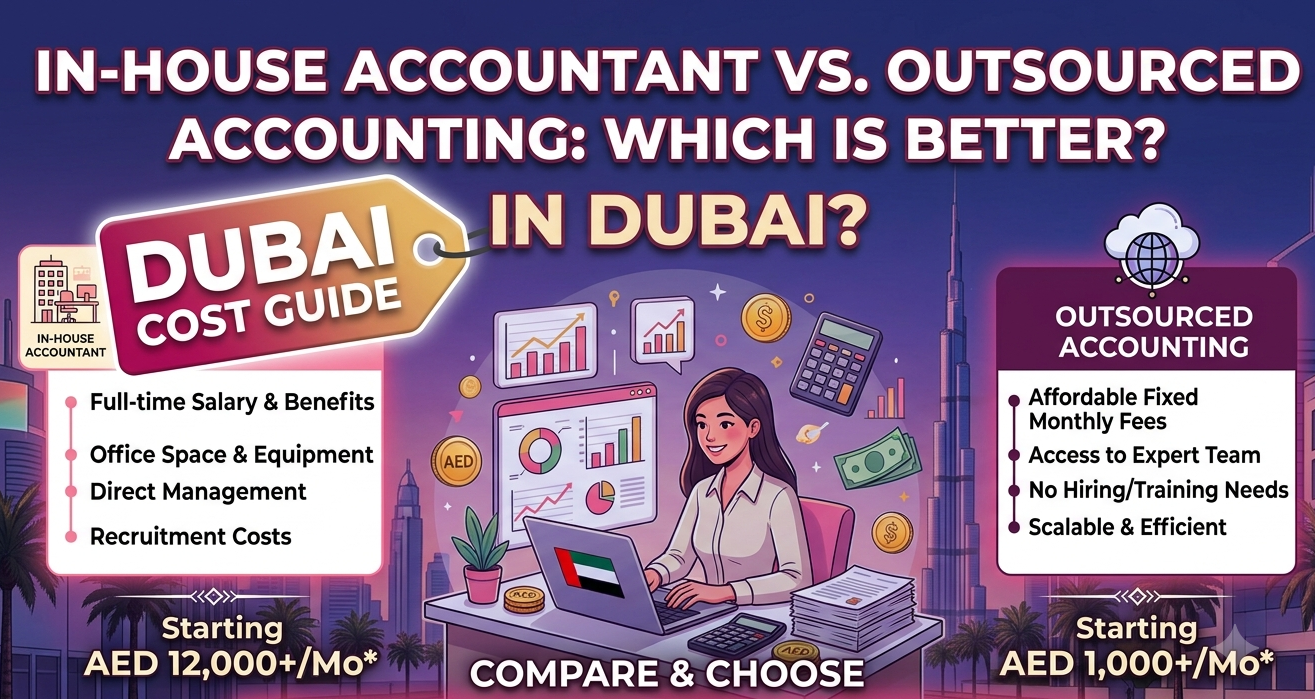
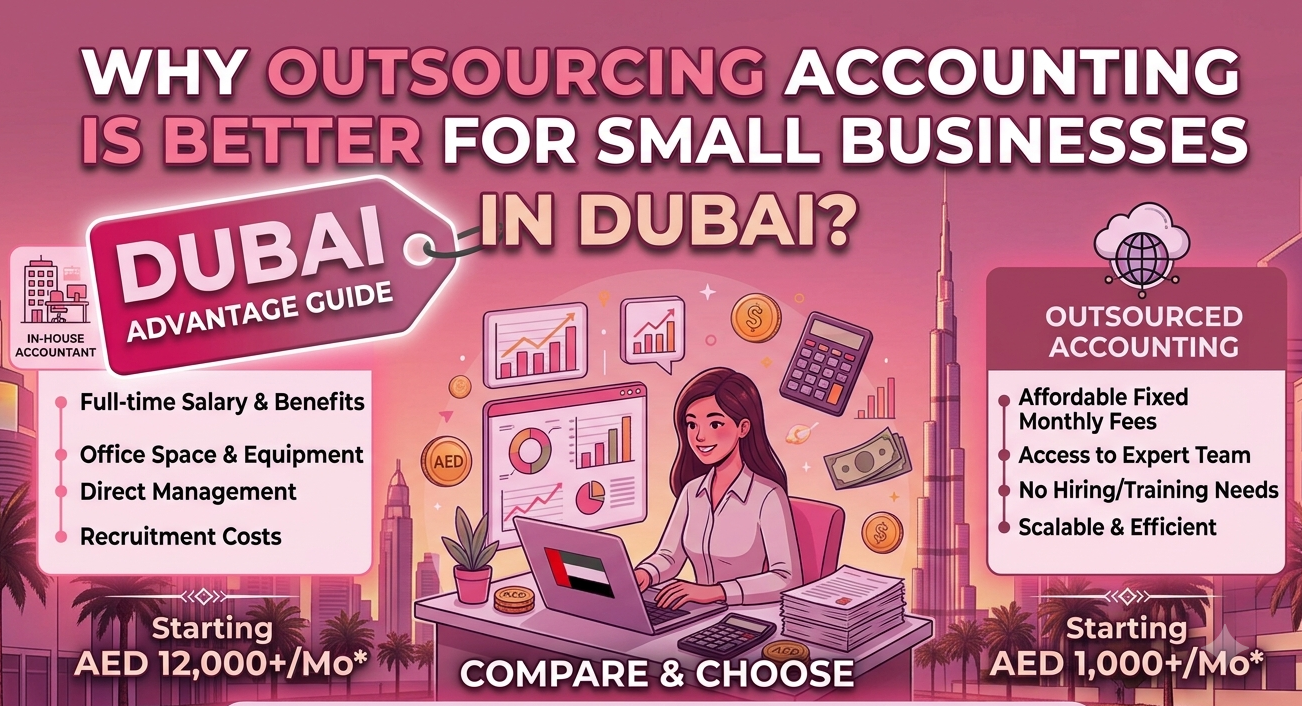
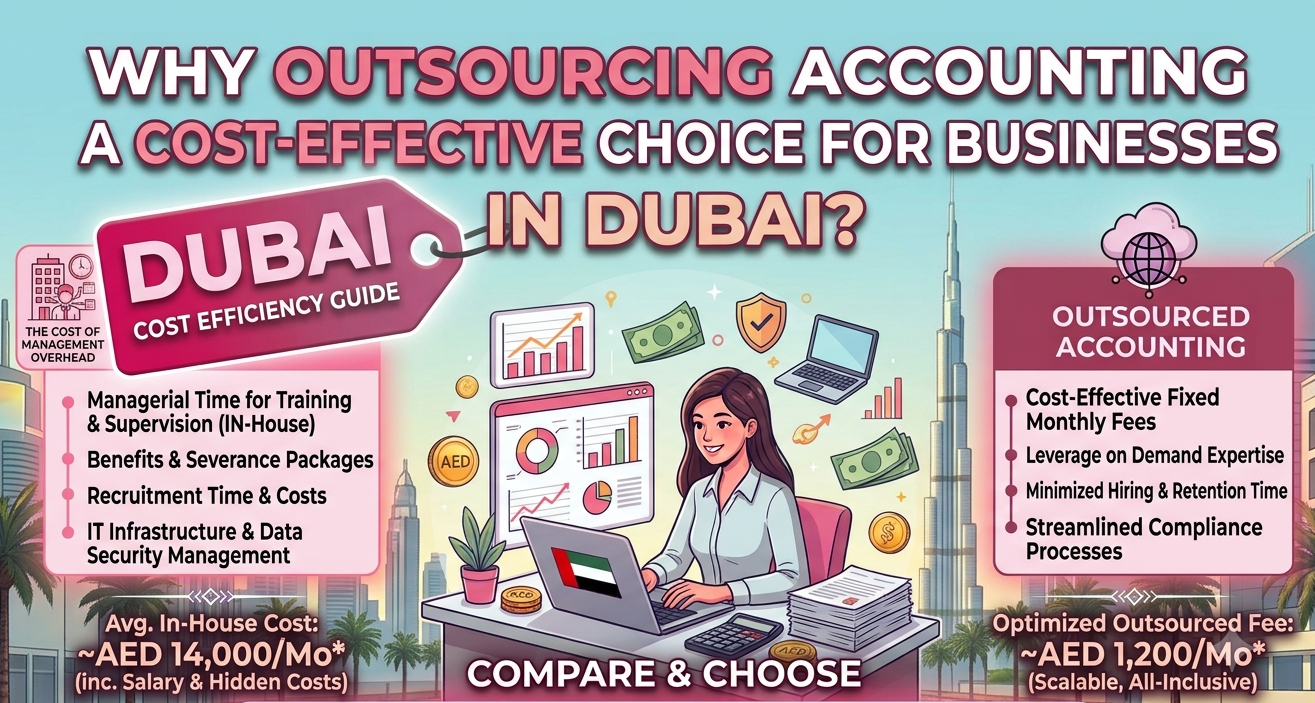
Hiring an in-house accountant involves more than paying a monthly salary. Businesses may also need to account for recruitment, employment-related expenses, office space, equipment, software, training, and employee leave.
With an outsourced accounting arrangement, the business generally pays an agreed service fee based on the scope and volume of work.
Here are some of the potential cost advantages.
Reduced recruitment and employment expenses
Recruiting and onboarding an accountant takes time and money. Outsourcing can reduce the need to recruit additional employees for routine accounting work, particularly when the workload does not justify a full-time position.
Flexible service arrangements
Not every business requires the same level of accounting support. A startup may need basic bookkeeping, while a growing company may require reconciliations, monthly reporting, and accounts payable management.
An outsourcing arrangement can be structured around the actual workload, subject to the provider's service terms.
Lower infrastructure and software overheads
An external accounting team may already have the necessary systems, equipment, and accounting software processes in place. This can reduce the need for a business to build all of these resources internally.
Software access, subscription costs, and responsibilities should be clearly agreed upon before work begins.
Better use of internal resources
Business owners and operational teams can spend more time on sales, customer service, and business development rather than routine financial administration.
The actual savings depend on transaction volume, service scope, reporting requirements, and the cost of the existing accounting setup.
3. Why Consider an Accounting Team Based in India?
Businesses in Dubai can consider working with an experienced remote accounting team based in India for suitable accounting and bookkeeping activities.
Potential advantages include:
Cost flexibility: Compare the proposed service fee with the full cost of maintaining equivalent internal capacity.
Remote working: Share approved accounting documents and records through secure digital systems.
Scalable support: Adjust the scope of work as transaction volumes and business requirements change.
Accounting software familiarity: Work with a team experienced in platforms such as QuickBooks, Zoho Books, and other relevant accounting systems.
Structured reporting: Establish regular reconciliations, month-end closing procedures, and financial reporting schedules.
However, choosing an offshore provider requires careful consideration of data security, confidentiality, communication, time-zone coordination, and knowledge of applicable UAE accounting and tax requirements.
Outsourcing work does not automatically transfer every legal or regulatory responsibility away from the business. UAE-specific compliance activities should be assigned to appropriately qualified professionals and authorized providers where required.
4. What Accounting Activities Can Dubai Businesses Outsource?
The scope of outsourced work can vary according to the company's needs.
Bookkeeping and transaction recording
Maintain organized records of sales, purchases, expenses, receipts, and payments.
Bank reconciliation
Compare accounting records against bank statements to identify discrepancies and ensure transactions are properly recorded.
Accounts payable and receivable
Track supplier invoices, customer balances, payment schedules, and outstanding receivables.
Monthly financial reporting
Prepare agreed financial reports, including profit and loss statements, balance sheets, and cash flow summaries.
Accounting software management
Support routine accounting activities in systems such as QuickBooks and Zoho Books, subject to the agreed access and responsibilities.
Tax and compliance support
Accounting records can support VAT, corporate tax, and other compliance processes. The exact scope must be agreed upon, and regulated or specialist activities should be handled by appropriately qualified or authorized professionals where required.
5. How Much Can a Business Save by Outsourcing Accounting?
There is no single saving percentage that applies to every business.
For a meaningful comparison, a business should calculate the total cost of its existing arrangement, including salary, employment-related expenses, recruitment, software, equipment, and other relevant overheads.
It should then compare this with an outsourced proposal covering an equivalent scope of work.
Before accepting a quotation, check:
The number of transactions included.
The number of bank accounts and entities covered.
Whether reconciliations and monthly reports are included.
Whether payroll, VAT, and corporate tax support are included or charged separately.
Whether historical bookkeeping or catch-up work costs extra.
What additional fees apply when transaction volumes increase.
Comparing the same scope of work helps businesses understand whether outsourcing provides genuine financial value.
6. How to Choose the Right Outsourced Accounting Provider
Cost should not be the only deciding factor. An accounting provider will work with important financial records, so businesses should assess the quality and security of the service.
Consider the following before making a decision:
Relevant experience: Does the team understand your industry, accounting software, and reporting needs?
Clear deliverables: Are the monthly tasks, deadlines, and responsibilities documented?
Data security: Are access controls, confidentiality agreements, and secure file-sharing procedures in place?
Communication: Is there a clear contact person and an agreed reporting schedule?
Compliance knowledge: Can the provider support the specific UAE requirements relevant to your business?
Transparent pricing: Does the quotation clearly identify included services and additional charges?
A reliable arrangement should provide clear records, defined responsibilities, and consistent communication rather than focusing solely on the lowest fee.
Conclusion
Outsourced accounting can be a practical option for Dubai startups and SMEs that want to manage accounting costs, maintain organized financial records, and access flexible accounting support without building every function internally.
A remote team based in India may be suitable for businesses whose accounting requirements can be managed securely and effectively online. The best arrangement depends on the company's workload, reporting needs, compliance requirements, and the provider's capabilities.
If your business is considering outsourced accounting or bookkeeping, start by identifying your monthly transaction volume, current accounting processes, and reporting requirements. These details will help you compare service providers and select a suitable arrangement.
Looking for remote accounting and bookkeeping support for your business in Dubai?
Contact our team to discuss your accounting requirements and explore a service arrangement tailored to your business needs.